Sealed Tight, Cooking Slow: How a Suffocating Attic Shortens Your Roof's Life
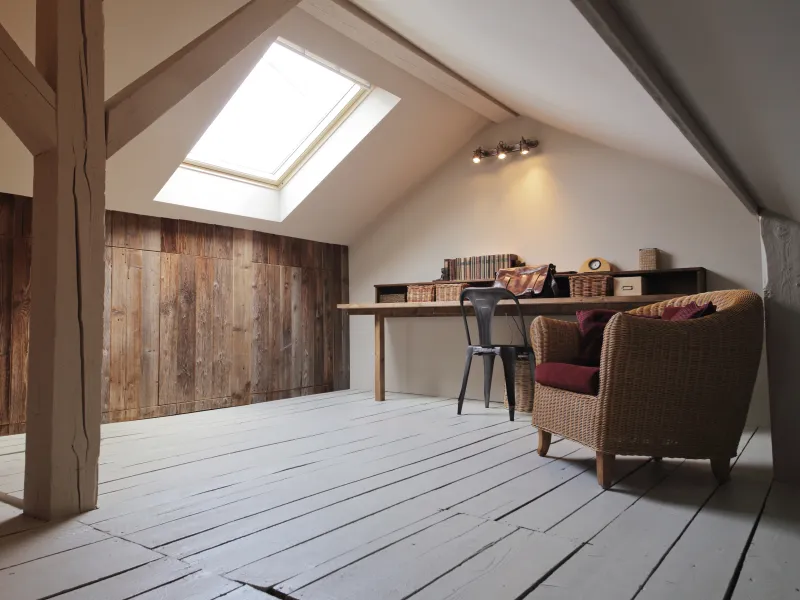
Photo: attic roof sheathing underside with soffit vents and insulation baffles, via www.creaton.com
There's a common assumption that an attic is just storage space with a lid on it. In reality, it's a working buffer between your living space and the outside world, and it has two very different jobs that homeowners routinely blend together.
Insulation slows heat from moving through the ceiling. Ventilation moves air through the attic itself, flushing out heat and moisture. One without the other is a half-finished job — and the attic usually gets blamed for problems that actually started at the roof deck.
Two systems, two jobs
Think of insulation as a blanket and ventilation as an open window. Piling on more blanket while the window stays shut doesn't make the room fresher; it just makes it warmer and damper. That's roughly what happens when a homeowner adds blown-in insulation without checking whether the soffit vents are still breathing. The attic gets hotter, the moisture has nowhere to go, and the roof sheathing takes the hit.
How the air is supposed to move
In a vented attic, the airflow path is straightforward: cooler air enters low through soffit vents at the eaves, travels up the underside of the roof deck (guided by baffles that keep insulation from blocking the opening), and exits high through a ridge vent along the peak or through gable or roof vents.
As a rough sizing guide, the long-standing rule of thumb is one square foot of net free vent area for every 150 square feet of attic floor, split evenly between intake and exhaust. Balanced is the key word — a ridge vent with no working intake vents doesn't draw air up, it just sits there. Soffit vents with a blocked exhaust don't vent, they pressurize.
Where it goes wrong
Blocked soffits are the number one culprit, and it's almost always insulation. Blown-in material drifts into the eaves and seals the openings, or batt insulation gets shoved tight against the roof deck. Baffles — those rigid channels stapled between rafters at the eaves — exist to prevent exactly this, and they're frequently missing after a re-insulation job.
Other common failures:
- Ridge vent covered or painted over. A roofer shingled over it, or a previous owner sealed it to stop a draft.
- Mismatched vent types. Mixing a powered fan, gables, and a ridge vent can make them fight each other instead of working together.
- Clogged screens and louvers. Years of dust, pollen, and insect nests cut airflow to a trickle.
- Finished attics. A converted attic with no vent path and no air sealing traps moisture right against the deck.
The signs to look for
Get up there with a strong flashlight on a cool, dry day. You're looking at the underside of the roof deck, not the insulation.
Frost or condensation on the sheathing and nails. In cold weather, moisture from the house condenses on the coldest surface — the roof deck. If the nail tips are frosted or the plywood feels damp, warm air is escaping and has nowhere to vent.
Dark staining and streaking on the sheathing. Gray-black discoloration, especially near the ridge or on the north-facing slope, is often the early stage of mold growth on a surface that stays damp. It can look like a shadow at first and spread into a mottled stain over a season or two.
Rusted nails, fasteners, and truss plates. Metal corrodes in a humid attic. Rust streaks under the deck are a clear signal that moisture is accumulating and staying.
Curling, warping, or soft sheathing. Wood that's been repeatedly baked and dampened doesn't return to shape. If the deck feels spongy under your palm, that's real damage, not cosmetic.
Ice dams along the eaves. When the deck stays warm, snow melts near the ridge and refreezes at the cold overhang. Water backs up under the shingles, rots the fascia, and finds its way inside. Ventilation and air sealing are the real fix; heat cable is a patch.
Shingles aging too fast. From the outside, look for ripples, buckling, or a worn-out look on a roof that's well short of its expected lifespan. A deck running at 140 to 150 degrees in July literally cooks the shingles from below, and asphalt doesn't recover from that.
A musty smell in the house. Not a roof symptom per se, but one that frequently traces back to an attic with no ventilation.
What you can check yourself
- From inside the attic, confirm daylight is visible through both the soffit openings and the ridge vent. If neither shows light, you have your answer.
- Make sure insulation isn't touching the roof deck at the eaves and that baffles are installed and intact.
- Clear debris from soffit vents outside with a brush or a shop vac, and trim any shrubs pressed against the house.
- Seal obvious air leaks from the living space — can lights, attic hatch weatherstripping, plumbing penetrations — since warm air is what fuels condensation in the first place.
- Never cover the ridge vent or block soffits with storage boxes and holiday bins.
When to bring in a roofer or attic specialist
If you find soft sheathing, widespread staining, or heavy rust, get a professional assessment before you add another inch of insulation — otherwise you'll simply trap the problem under a new blanket. Same goes for vent design changes, baffle retrofits in a tight space, and any mold remediation. A roofer can also confirm from the outside whether the ridge vent is actually functional or just decorative.
Fix airflow first, seal air leaks second, and insulate third. In that order, an attic does its job quietly for decades. In the wrong order, it does its job — just not the one you wanted.