Before the Foundation Cracks: Turning Your Water Meter Into a Leak Detector
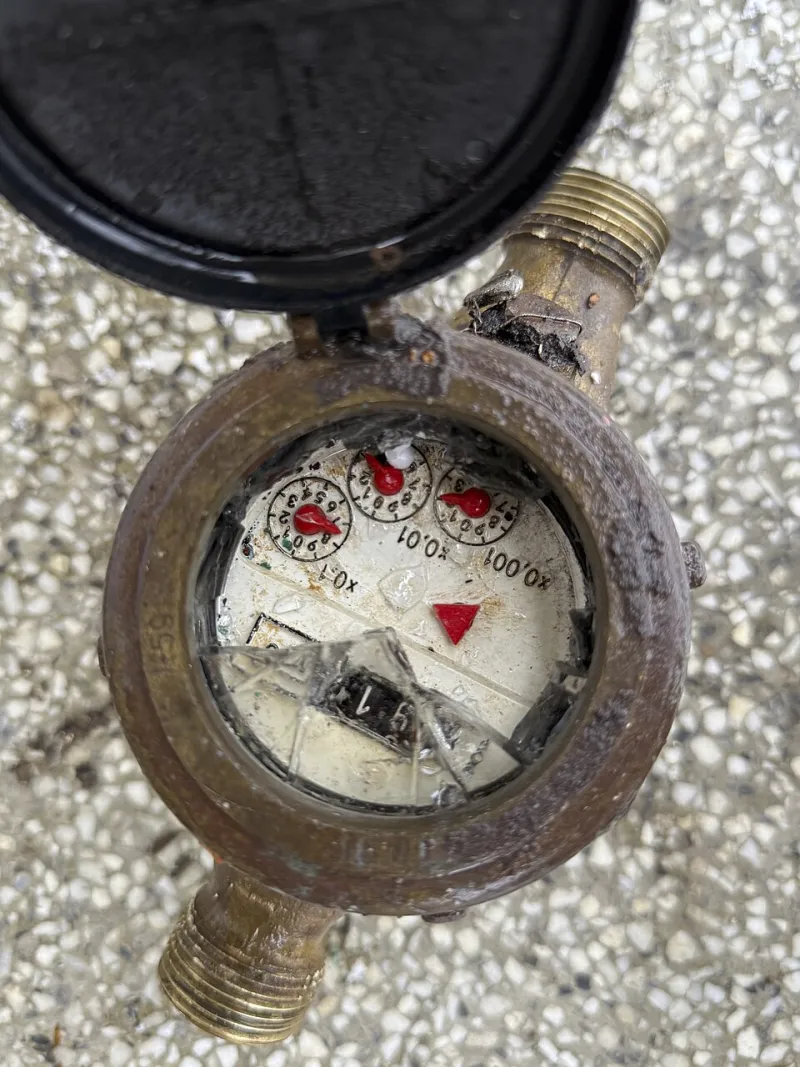
Photo: Shixart1985, CC BY 2.0, via Wikimedia Commons
Water damage rarely introduces itself. It starts as a damp spot in the basement, a toilet that runs for a few seconds too long, a patch of lawn that stays green in August. By the time it reaches the foundation, the repair bill has usually left the plumbing category and entered the structural one.
The good news is that most homes already have a leak detector installed. It is the water meter. You just have to know how to read it.
Start with the bill, not the basement
Before you crawl around with a flashlight, look at your water bill history. Most utilities show usage in gallons or cubic feet, often with a graph. You are not looking for the highest month—summer irrigation can do that. You are looking for a baseline shift. Did a family of four suddenly start using 2,000 gallons more per month with no change in routine? Did the winter usage creep up even though the sprinklers were off?
A small continuous leak is sneaky because it does not look dramatic. A toilet flapper that leaks a half-gallon per minute wastes 720 gallons a day. That is more than 21,000 gallons a month, and it can be completely silent. A dripping outdoor spigot or a failed irrigation valve can do the same.
The overnight meter test
This is the simplest diagnostic in home maintenance. Pick a night when nobody will use water for several hours—ideally overnight. Before bed, shut off every fixture: faucets, dishwasher, washing machine, ice maker, humidifier, irrigation system. Take a photo of the meter reading. If your meter has a leak indicator—usually a small triangle, gear, or dial—note whether it is moving.
In the morning, before anyone showers or makes coffee, check the meter again. If the reading changed, or the leak indicator moved, you have water going somewhere it should not. If the meter is digital and scrolls through displays, cycle to the flow-rate screen if it has one. Even a tiny movement matters.
A few caveats: some meters are remote-read and may not have a visible indicator. Some have a low-flow dial that spins only when water is moving. If you are unsure, call your utility and ask how to read your specific model. They do this all the time.
Isolate the usual suspects
Once you know water is moving, the goal is to narrow the search without tearing into walls. Start with the fixtures that are easiest to check.
Toilets are the most common culprit. Put a few drops of food dye in the tank, wait 15 minutes without flushing, and look in the bowl. If color appears, the flapper or fill valve is leaking. Replace the flapper—it is a cheap part and a ten-minute job. Do this for every toilet in the house, including the guest bathroom nobody uses.
Next, check under every sink for moisture, corrosion, or a faint drip. Look at the supply lines behind the washing machine and refrigerator. Pull the refrigerator out if you can and inspect the ice maker line. Check the water heater for dampness around the base or fittings. If you have a reverse-osmosis system or a whole-house humidifier, those are plumbed appliances and deserve a look too.
Irrigation can hide in plain sight
If the overnight test points to a leak but the house is dry, the irrigation system is the next stop. Run each zone manually and watch. Look for a valve that does not shut off completely, a head that is sunk below grade, or a puddle that never dries. A stuck valve can send water underground for weeks without a visible geyser.
If you have a smart controller, check the app for flow alerts or abnormal run times. Some systems can detect a broken head or a valve that is drawing more water than it should. If you do not have one, a manual audit once a season is still worth the time.
When to stop hunting and call a plumber
The meter test tells you that water is moving. It does not tell you where. If you have ruled out toilets, visible supply lines, and irrigation, the leak may be under a slab, behind a wall, or in the main service line. That is the point to call a licensed plumber. They can use acoustic listening equipment, thermal imaging, or pressure testing to locate the leak without demolishing the house.
Do not ignore a small meter movement because the bill is only slightly higher. Foundation damage is slow and expensive. Water softens soil, erodes support, and finds cracks. A leak that costs $40 a month can quietly undermine a $10,000 foundation repair.
Make the meter a monthly habit
You do not need to become a plumbing detective every week. Read your meter on the same day each month, after everyone has gone to bed, and compare it with the previous month. Keep a note in your phone. When the number jumps, you will know within days instead of discovering it on a utility bill three months later.
Your water bill is not nagging you. It is whispering. The meter is the earliest warning system you already own, and it costs nothing to listen.