Smart Home Gadgets That Actually Pay You Back (And the Ones That Don't)
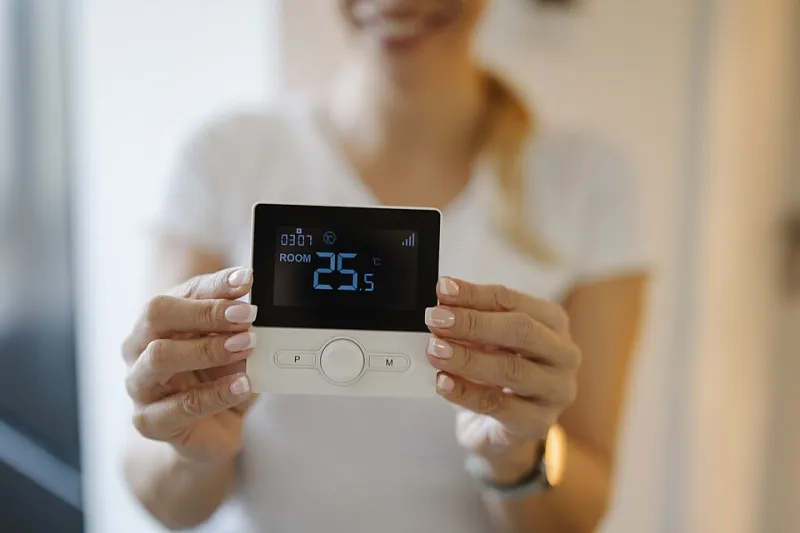
Photo: Shixart1985, CC BY 2.0, via Wikimedia Commons
Walk into any Best Buy or scroll through Amazon for five minutes and you'll find no shortage of gadgets promising to make your home smarter, greener, and cheaper to run. Smart bulbs! Smart plugs! Smart everything! But here's the question nobody seems to ask loudly enough: do any of these things actually save you money?
The honest answer is: some do, some sort of do, and some are basically just cool toys with a green marketing sticker slapped on them.
At Home Helping Things, we're not here to hype products—we're here to help you make smart decisions about your home. So let's dig into the real numbers.
The Benchmark: What Counts as a "Worthwhile" Investment?
Before evaluating individual devices, we need a standard. For this guide, we're defining a worthwhile smart home upgrade as one that:
- Pays for itself within 5 years through documented energy or water savings
- Works reliably without requiring constant troubleshooting or app updates
- Adds measurable utility, not just novelty
With that bar set, let's run the numbers.
Smart Thermostats: The Clear Winner
If there's one smart home device that has consistently proven its financial value across climates and home types, it's the smart thermostat. The data here is genuinely compelling.
The Google Nest Thermostat and Ecobee SmartThermostat are the two most widely studied products in this category. According to Google's own published data—corroborated by independent studies from Energy Star and various utility companies—Nest users save an average of 10–12% on heating costs and 15% on cooling costs annually.
For a typical US household spending around $1,500–$2,000 per year on heating and cooling, that translates to roughly $150–$300 in annual savings. The devices themselves run $130–$250 installed (DIY) or $250–$400 with professional installation.
Payback period: 1–2 years in most US climates.
The savings are even more pronounced in extreme-climate regions. Homeowners in Texas, Arizona, the Deep South, and the upper Midwest—where HVAC systems run hard for months at a time—often see payback in under a year.
One important note: smart thermostats work best in homes where occupancy patterns are somewhat predictable. If your household has wildly variable schedules, the "learning" features may not optimize as effectively, though manual scheduling still delivers solid savings.
Water Leak Detectors: Cheap Insurance with Serious Upside
This one doesn't save you money every month—but it can save you thousands in a single incident.
Smart water leak sensors from brands like Moen, Govee, and Aeotec typically run $20–$50 per sensor and connect to your phone via Wi-Fi or a smart home hub. They detect moisture at floor level and alert you immediately when water is present—under sinks, behind toilets, near water heaters, in basements.
The average water damage insurance claim in the US runs approximately $11,000, according to the Insurance Information Institute. And many of those claims stem from slow leaks that went undetected for days or weeks—exactly what these sensors are designed to catch.
At $30–$50 per sensor, placing four to six of them in high-risk spots around your home costs $120–$300 total. That's a modest investment for the kind of early warning that can prevent a catastrophic repair bill.
Payback period: Immediate risk mitigation. These don't reduce monthly bills, but the ROI on a single prevented leak event is enormous.
Some homeowners also qualify for a discount on their homeowner's insurance premium after installing water monitoring systems—worth checking with your insurer.
Automated Lighting: Depends Heavily on Your Situation
Smart lighting is probably the most overhyped category in the smart home space from a pure savings standpoint.
Here's the reality: LED bulbs already use about 75% less energy than incandescent bulbs. The marginal savings from also making those LEDs smart—meaning they turn off automatically or dim on a schedule—are relatively modest for most households.
If you're replacing incandescent or CFL bulbs with smart LEDs, the energy savings are real and meaningful. But if your home is already fully LED-equipped, adding smart controls might save you $50–$100 per year at best, while the upfront investment for a full-home setup from brands like Philips Hue or LIFX can easily run $300–$800+.
Payback period: 3–8+ years, depending on current bulb types and usage patterns.
The better argument for smart lighting isn't energy savings—it's convenience and security. Lights on timers while you travel, motion-activated exterior lighting, and app-controlled ambiance all have legitimate value. Just don't buy them expecting a quick financial return.
Best use case: Homes still running incandescent or older CFL bulbs, and outdoor/security lighting scenarios.
Smart Power Strips and Plugs: Small Gains, Low Cost
Standby power—the electricity your devices consume while plugged in but not actively in use—accounts for roughly 5–10% of the average American household's electricity bill, according to the Department of Energy. Smart plugs and power strips that cut standby power to entertainment centers, home offices, and kitchen appliances can chip away at that.
Individual smart plugs run $10–$25 each. Realistically, a household might save $30–$80 per year with strategic placement on high-draw devices.
Payback period: 1–3 years for targeted use. Not a game-changer, but low-risk and low-effort.
Smart Irrigation Controllers: Strong ROI in the Right Climates
For homeowners with in-ground irrigation systems, smart controllers like the Rachio 3 or RainBird e-WiFi are genuinely impressive performers. These systems use local weather data to skip watering cycles when rain is expected and adjust schedules based on soil type and plant needs.
Rachio's published data suggests average water savings of 30–50% compared to conventional timer-based systems. For households in water-stressed regions like California, Colorado, Texas, and the Southwest—where water bills are high and outdoor watering restrictions are common—this translates to $100–$300+ in annual savings.
The controllers themselves run $150–$250. Professional installation, if needed, adds $100–$200.
Payback period: 1–3 years in high-usage climates. Less compelling in the rainy Pacific Northwest or the humid Southeast where outdoor watering needs are lower.
What's Not Worth It (Yet)
A few categories that get a lot of buzz but don't reliably clear our 5-year payback bar for most homeowners:
- Smart refrigerators and appliances: The energy savings over conventional Energy Star models are minimal, and the added cost is substantial.
- Voice assistant hubs (for savings purposes): Convenient? Sure. Energy-saving? Not meaningfully.
- Smart window shades: High cost, modest energy impact unless you have very large, south-facing windows in a hot climate.
Putting It All Together
If you're building a smart home strategy around genuine financial returns, here's a practical priority order:
- Smart thermostat — Do this first. Always.
- Water leak sensors — Affordable, high-consequence protection.
- Smart irrigation controller — If you have an in-ground system and live in a dry or high-cost-water region.
- Smart plugs — Low-cost, low-risk, modest gains.
- Smart lighting — Only if replacing non-LED bulbs, or for security applications.
The smart home doesn't have to be an expensive experiment. Focus on the upgrades that solve real problems—energy waste, water damage risk, inefficient irrigation—and you'll actually come out ahead. Everything else can wait until the price comes down and the technology matures.