Knowing When to Put Down the Wrench: Home Repairs That Punish DIY Mistakes
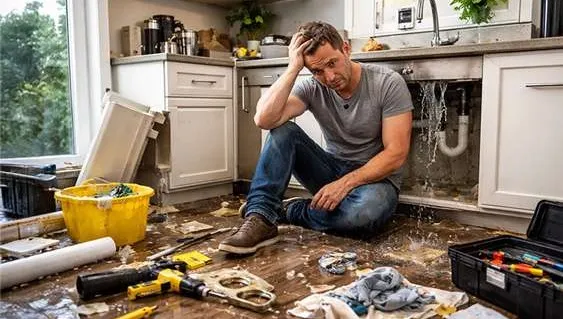
Photo: homeowner looking frustrated at home repair project with tools, via my.funnelpages.com
There's something genuinely satisfying about fixing something in your own home. You save money, you learn a skill, and honestly, it just feels good. YouTube has made a generation of homeowners feel like they can handle almost anything with the right tutorial and a hardware store run.
But here's the thing nobody talks about enough: some repairs have a very unforgiving learning curve. Mess them up, and you're not just back to square one — you're paying a professional to fix what you broke on top of what was originally broken. That's the DIY trap, and it catches more homeowners than you'd think.
Let's break down which projects are genuinely in your wheelhouse, which ones are borderline, and which ones you should absolutely hand off before you make things worse.
The Projects You Can Realistically Handle
Before getting into the danger zone, it's worth acknowledging that plenty of home repairs are genuinely DIY-friendly. Patching small drywall holes, replacing a toilet flapper, swapping out a light switch, caulking around a tub, painting — these are tasks where a mistake is usually minor and fixable. The risk ceiling is low.
The key trait these projects share: the damage from a mistake is contained. You mess up a paint job, you repaint. You install a toilet flapper wrong, it just keeps running and you try again. Nothing cascades.
Keep that word in mind — cascading — because that's exactly what separates low-risk DIY from high-risk DIY.
Electrical Work: The Repair That Doesn't Forgive
Replacing a light switch or outlet on a clearly labeled, properly functioning circuit? Most competent DIYers can handle that safely. But the moment you're dealing with anything beyond a simple swap — think panel work, running new circuits, upgrading outlets in older homes, or anything involving aluminum wiring — you're in professional territory.
The problem with electrical mistakes isn't just that they don't work. It's that they can appear to work fine while creating a fire hazard inside your walls. A loose connection or improperly grounded wire might not show any symptoms for months, and then one day you've got a problem that no homeowner's insurance company is thrilled to hear started with unlicensed DIY electrical work.
In the US, most jurisdictions require permits for significant electrical work, and for good reason. An electrician's fee looks very different when you compare it to the cost of rewiring a room after a fire.
Plumbing Beyond the Basics
Again, there's a reasonable DIY tier here. Fixing a leaky faucet, replacing a showerhead, even swapping out a toilet — these are manageable. The parts are standardized, the shutoffs are accessible, and a mistake typically means water on the floor, not water inside your walls.
But move into anything involving supply lines behind walls, drain-waste-vent systems, or anything connected to your main water line, and the stakes change dramatically. A botched connection inside a wall can leak slowly for months before you notice — and by then, you're looking at mold remediation, drywall replacement, and possibly subfloor repair on top of the original plumbing fix.
The other sneaky one? Water heater installation. It involves both plumbing and gas or electrical connections, and it's the kind of job where doing it wrong doesn't just create a mess — it creates a safety hazard.
Roof Repairs: Height Plus Complexity Is a Tough Combo
Roofing is one of those areas where homeowners consistently underestimate both the physical danger and the technical skill involved. Replacing a few shingles after spotting a minor issue sounds simple. But improper flashing installation, misaligned shingles, or missed underlayment problems can leave your roof looking fine from the street while still letting water in.
Water intrusion from a bad roof repair is one of the nastiest home problems there is, because it can travel. The leak point on your ceiling might be three feet from where the actual breach is. And by the time interior damage shows up, you've often got insulation, framing, and drywall all in the mix.
Add in the fall risk — roofing injuries send tens of thousands of Americans to emergency rooms every year — and this is a category where calling a licensed roofer is almost always the smarter financial and physical call.
Foundation and Structural Repairs
Cracks in your foundation or signs of structural shifting are not the place to experiment. This is the literal base of your house. Some hairline cracks are cosmetic and manageable, but anything that suggests active movement, water infiltration, or load-bearing compromise needs a structural engineer or foundation specialist looking at it — not a bag of hydraulic cement from the hardware store.
DIY foundation patches can mask symptoms without addressing causes. You seal a crack, it looks fine, and meanwhile the underlying issue — soil movement, drainage problems, hydrostatic pressure — keeps doing its thing. When the problem resurfaces, it's usually bigger and more expensive than if it had been properly assessed the first time.
How to Honestly Assess Your Skill Level
Here's a practical gut-check before you dive into any repair:
- Have you done this specific type of task before, successfully? Watching a video is not the same as having hands-on experience.
- Do you have the right tools, or are you improvising? Improvised tools lead to improvised (read: wrong) results.
- Do you understand what a mistake looks like, and how to fix it? If you can't identify a problem mid-project, you might not catch it before it's too late.
- What's the worst-case scenario if this goes wrong? If the answer involves structural damage, fire, flooding, or health hazards, that's a professional job.
When Hiring a Pro Actually Saves You Money
This is the part that feels counterintuitive but plays out over and over again: paying for professional work upfront is often cheaper than paying to undo a DIY mistake.
Pros bring the right tools, the right materials, and — critically — they know what else to look for while they're in there. A licensed plumber fixing a supply line might spot a slow drain issue that would've become a much bigger problem in six months. An electrician running a new circuit might catch a wiring issue from the previous owner. That kind of experience has real dollar value.
There's also the warranty and liability angle. Licensed contractors typically stand behind their work. If something fails, you have recourse. If you do the work and something fails, you're on your own — and potentially on the hook with your insurance company too.
The Bottom Line
DIY home repair is genuinely worthwhile for the right projects. It saves money, builds skills, and gives you a real understanding of how your home works. But the homes that stay in the best shape long-term aren't necessarily the ones with the most hands-on owners — they're the ones with owners who know exactly where their limits are.
Knowing when to call a professional isn't admitting defeat. It's just good home management.