Your HVAC System Is Quietly Counting Down — Here's How to Read the Clock
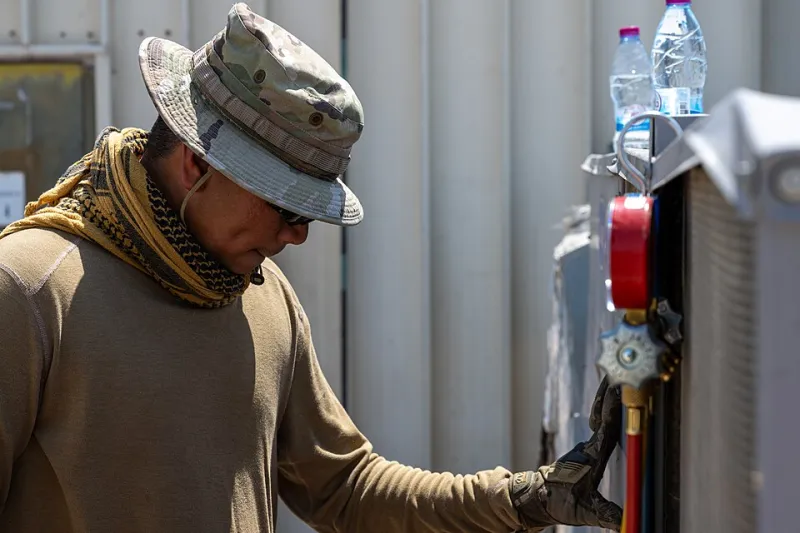
Photo: U.S. Air Force AFCENT by Airman 1st Class Derrick Bole, Public domain, via Wikimedia Commons
Here's a scenario that plays out in homes across the country every single winter: temperatures drop into the teens, you crank up the heat, and nothing happens. Or worse — something happens, but it sounds like a dying robot and smells like burning dust. Your HVAC system, which you haven't thought about since last spring, has officially given up.
The frustrating part? That failure almost never comes out of nowhere. The signs were there. They were just easy to ignore.
If you want to avoid an emergency call to an HVAC technician in February — when rates spike and availability is tight — it pays to understand how these systems age, what they're telling you when they start to struggle, and what you can actually do to squeeze more life out of them.
How Long Should an HVAC System Actually Last?
The standard answer you'll find online is 15 to 20 years for a central air and heating system. And that's not wrong, exactly — but it's also not the whole story.
That lifespan estimate assumes consistent maintenance, reasonable usage, and average climate conditions. In reality, a system that's been pushed hard through brutal Midwest winters, neglected for a few years, or installed in a home with poor duct insulation might start showing serious wear at the 10 or 12-year mark. On the flip side, a well-maintained system in a mild climate with a diligent homeowner can sometimes push past 20 years without major issues.
Age alone isn't the metric you should be tracking. How your system is behaving right now tells you a lot more.
Warning Signs Your HVAC Is Approaching the End
These aren't the kind of signs that announce themselves loudly. Most of them creep up gradually, which is exactly why so many homeowners miss them.
Your energy bills are climbing for no obvious reason. If your usage habits haven't changed but your utility costs keep ticking upward, your system is likely working harder to deliver the same result. That's a classic sign of declining efficiency.
The system cycles on and off more than it used to. Short-cycling — where the unit kicks on, runs briefly, then shuts off and starts again — puts enormous strain on the compressor and other components. It's often a sign that something is already failing.
Rooms in your home feel unevenly heated or cooled. When certain areas of the house are noticeably warmer or cooler than others, it could point to failing components, duct issues, or a system that's simply losing its ability to distribute air effectively.
You're calling for repairs more often. One repair every few years is pretty normal. But if you've had a technician out two or three times in the past 18 months, you're likely in a pattern that's going to keep getting more expensive.
Strange noises have become the new normal. Rattling, banging, grinding, or high-pitched squealing all point to mechanical problems. A well-functioning HVAC system should run relatively quietly.
The system is over 15 years old and uses R-22 refrigerant. R-22 (also known as Freon) was phased out in the US as of 2020, which means it's no longer manufactured domestically. If your older system needs a refrigerant recharge, you're looking at expensive reclaimed supplies — and a system that's already past its prime.
Emergency Replacement vs. Planned Upgrade: The Real Cost Difference
This is where things get real. Emergency HVAC replacements — the kind that happen when your system dies mid-January — almost always cost more than planned replacements, and not just a little more.
When you're replacing a system on your own timeline, you can get multiple quotes, compare equipment options, look for rebates from your utility company or through federal tax credits (the Inflation Reduction Act expanded HVAC efficiency incentives significantly), and schedule installation during a slower period when contractors have more flexibility.
When you're replacing a system in a crisis, you're at the mercy of whoever can get there fastest. Prices for both equipment and labor tend to run higher during peak demand seasons. You may end up with whatever unit is in stock rather than the one that's best suited to your home.
The difference in total cost between a planned replacement and an emergency one can easily range from $1,000 to $3,000 or more, depending on your market and the size of your system. That's a meaningful amount of money — and it's entirely avoidable with a little foresight.
Practical Ways to Extend Your System's Life
Before you start pricing out new equipment, it's worth knowing that targeted maintenance can genuinely add years to an aging system. These aren't magic fixes, but they make a real difference.
Change your air filter regularly — and actually do it. A clogged filter forces your system to work harder, which accelerates wear on the blower motor and other components. During heavy-use seasons, check it monthly. Most homes need a new filter every 1 to 3 months.
Schedule a professional tune-up before each major season. A pre-winter inspection from a licensed HVAC technician typically costs between $75 and $150, and it's one of the best investments you can make. A good tech will check refrigerant levels, clean coils, test electrical connections, and flag anything that's starting to wear out.
Keep the outdoor unit clear. Debris, overgrown vegetation, and dirt buildup around your condenser unit restrict airflow and reduce efficiency. Give it at least two feet of clearance on all sides and rinse it down with a garden hose once a year.
Seal leaky ducts. Studies have found that the average US home loses 20 to 30 percent of conditioned air through leaky ductwork. That's your HVAC system working significantly harder than it needs to. Sealing ducts — either DIY with mastic sealant or professionally — reduces that load.
Use a programmable or smart thermostat. Reducing unnecessary runtime when you're asleep or away from home lowers the total hours your system has to work, which directly affects how long it lasts.
When Replacement Actually Makes Sense
There's a useful rule of thumb in the HVAC world called the 5,000 rule: multiply the age of your system (in years) by the cost of the repair being quoted. If that number exceeds $5,000, replacement is almost always the smarter financial move.
For example, if your 14-year-old system needs a $400 repair, that's $5,600 — right on the edge. If it's a 16-year-old system needing an $800 compressor repair, that's $12,800 — replacement wins easily.
Beyond the math, if your system is over 15 years old, requires R-22 refrigerant, and is showing multiple symptoms from the list above, you're not saving money by nursing it along. You're just delaying an inevitable replacement while paying higher energy bills and repair costs in the meantime.
The sweet spot is replacing your system proactively — before it fails completely — so you're in control of the timing, the budget, and the decision.
Don't Wait for the Cold to Tell You
Your HVAC system is one of the hardest-working and most expensive pieces of equipment in your home. It deserves more than being ignored until it breaks. A little attention now — a filter change here, an annual tune-up there, a realistic look at its age and behavior — can mean the difference between a comfortable winter and a very expensive, very cold wake-up call.
The clock is ticking. Might as well know what time it is.