Your Porch Looks Great — Until It Doesn't: The Hidden Failures Happening Right at Your Front Door
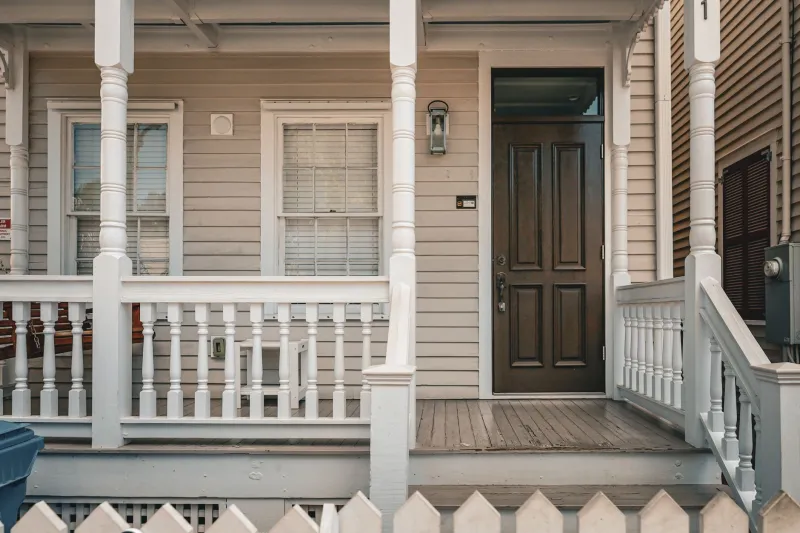
There's something almost ironic about the front porch. You sweep it, you put out a seasonal wreath, maybe you drop a couple of rocking chairs on it for curb appeal — and then you basically forget it exists. It looks fine. It feels fine. And that's exactly the problem.
Because while you've been focusing on the kitchen backsplash or the bathroom tile, your porch has been quietly taking a beating. Rain, UV, freeze-thaw cycles, humidity, insects — your entryway absorbs all of it, year after year, with very little protection and even less attention. By the time most homeowners notice something's wrong, the damage has already moved well past the cosmetic stage.
Let's talk about what's actually happening out there, why it's so easy to miss, and what you should be doing to stay ahead of it.
Why Your Porch Is One of the Most Exposed Structures on Your Property
Think about how a covered porch is built. It's attached to your home, but it's not really part of your home in the same way your living room is. It's open to the air on multiple sides, it has its own roof or overhang, and it sits on footings or posts that are planted directly in or near the ground. That combination creates a perfect storm of vulnerability.
Wood — whether it's your decking boards, porch posts, rim joists, or stair stringers — is constantly cycling through wet and dry conditions. Water gets in, wood swells. It dries out, wood contracts. Over hundreds of cycles, that movement breaks down finishes, opens up gaps at joints, and creates pathways for moisture to penetrate deeper into the structure. Once water gets into the substructure and can't dry out, rot sets in fast.
And here's the thing: the parts that rot first are almost always the parts you can't easily see.
The Three Failure Points Most Homeowners Miss
1. The Ledger Board and Flashing
If your deck or porch is attached to your house, there's a horizontal board called a ledger that connects the two. This connection point is one of the most failure-prone areas in residential construction. When the flashing — the metal barrier that's supposed to redirect water away from this joint — is improperly installed, missing, or has deteriorated over time, water seeps directly behind the ledger and into your home's rim joist and framing.
This damage is almost invisible from the outside. The ledger might look perfectly solid while the wood behind it is completely rotted through. Deck collapses that make the news? A significant number of them trace back to a failed ledger connection. This isn't a small-stakes problem.
2. Post Bases and Substructure Rot
Porch posts and deck posts need to sit above grade — meaning above the soil and away from standing water. When they don't, or when post base hardware corrodes and traps moisture against the wood, the bottom of the post begins to rot from the inside out. The post can look structurally intact on the surface while being hollow and compromised at its core.
Same goes for the joists and beams underneath your decking. If your deck boards have small gaps between them and water drains through, great. If not — or if debris has accumulated and is holding moisture against the framing — those structural members underneath are breaking down whether you know it or not.
3. Settling and Heaving Footings
Porches and decks are typically built on their own footings, separate from your home's foundation. In much of the country, those footings are vulnerable to frost heave — the ground freezing and expanding in winter, then thawing and settling in spring. Over years, this cycle can cause posts to shift, stairs to pull away from the structure, and the whole porch to rack slightly out of square.
A porch that's visibly pulling away from the house, has gaps forming at the connection point, or has steps that feel bouncy or unstable is telling you its footings are no longer doing their job. Left alone, this leads to accelerating structural damage at every joint.
Why We Miss These Warning Signs
Honestly? Because porches look fine for a long time before they aren't. The surface boards might still look okay even when the framing below them is soft. Paint and stain hide early-stage rot. A little bounce in the floor feels like just a quirk of older construction. We're wired to look at the visible surfaces, and porches are designed to look tidy even when they're struggling underneath.
There's also the familiarity factor. You walk across your porch every single day. You stop noticing the slight dip near the steps, or the way the railing wobbles just a little, or the small gap that's appeared where the porch roof meets the siding. These things happen gradually, and gradual change is incredibly easy to tune out.
A Practical Inspection Checklist for Porches, Decks, and Entryways
You don't need a contractor to do a meaningful first pass on your porch. Set aside 30 minutes, grab a flashlight and a flat-head screwdriver, and work through this list:
Surface and Decking
- Walk the entire surface slowly. Any soft spots, bounce, or flex between your feet and the framing below?
- Look for cracked, cupped, or splitting boards — these hold water and accelerate rot
- Check where boards meet posts or the house wall for gaps or dark staining
Railings and Balusters
- Push and pull every railing section. It should not move. A wobbly railing is a safety hazard, full stop
- Check the base of each baluster and post where it meets the decking
Ledger Board (if attached to house)
- Look for any gap between the ledger and your home's siding
- Check for rust staining, which indicates corroding flashing or hardware
- If accessible from a crawl space or basement, look at the inside face of the rim joist for water staining or soft wood
Posts and Supports
- Use your screwdriver to probe the base of every post. Sound wood resists the tip; rotted wood lets it sink in easily
- Check post base hardware for rust and make sure posts aren't sitting in standing water or soil contact
Steps and Stringers
- Probe the stair stringers (the diagonal side supports) at both the top and bottom where they connect to framing and ground
- Test each step tread for flex or softness
Roof, Overhang, and Flashing
- Look for dark staining or peeling paint on porch ceiling boards — these are signs of water infiltration from above
- Check where the porch roof meets your home's siding for gaps, missing caulk, or deteriorated flashing
- Look inside any light fixtures or ceiling fans for signs of moisture damage
Foundation and Footings
- Walk around the perimeter and look for posts or columns that appear to have shifted, tilted, or sunk
- Check for gaps between stairs and the main structure
When to Call a Pro
If your screwdriver probe finds soft wood in any structural member — especially posts, ledger boards, or stair stringers — stop DIYing and call a licensed contractor. Soft structural wood isn't a patch-and-paint situation. It needs to be assessed, and often replaced, by someone who can evaluate how far the damage has spread and whether the load-bearing capacity of the structure has been compromised.
Same goes for any visible separation between your deck or porch and your house. That gap is not cosmetic. It's a structural warning sign that needs professional eyes on it quickly.
The Bottom Line
Your porch might be the most photographed part of your home and the least maintained. It handles weather exposure that would challenge any structure, and it does it without the benefit of insulation, interior climate control, or much homeowner attention. The good news is that most serious porch failures don't happen overnight — they develop slowly, and a basic inspection once or twice a year gives you a real shot at catching problems while they're still manageable.
Spend a Saturday afternoon out there with a screwdriver and a flashlight. Your porch will tell you exactly what it needs. You just have to actually listen.