Your Bathroom Is Trying to Tell You Something: Decoding the Moisture Clues on Your Mirror and Walls
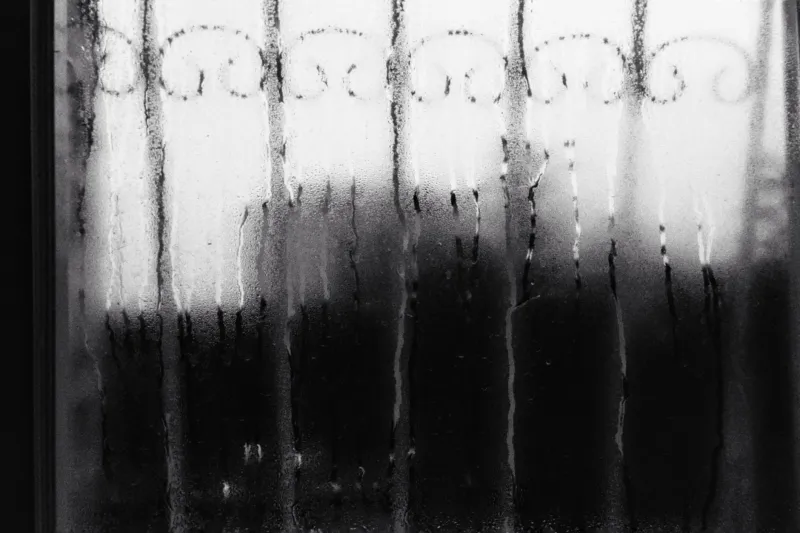
Every morning, millions of Americans stand in front of a fogged-up bathroom mirror and think absolutely nothing of it. It's just steam, right? No big deal. You wipe it down, go about your day, and forget it ever happened.
Except your bathroom didn't forget. And neither did the wall behind it.
Moisture patterns in your bathroom — the fog that lingers too long, the dark staining around your mirror frame, the ceiling that always looks a little dingy — are more than minor inconveniences. They're a running log of how well your ventilation system is actually doing its job. And in most homes, that log tells a pretty uncomfortable story.
Why Bathrooms Are Moisture Minefields
A typical shower dumps a surprising amount of water vapor into the air in a very short time. Hot showers, long baths, and even running the sink can push indoor humidity through the roof — sometimes spiking to 90% or higher in an enclosed bathroom. That moisture has to go somewhere.
In a well-ventilated bathroom, it gets pulled out through an exhaust fan and vented outside. In a poorly ventilated one, it just... hangs around. It settles on cool surfaces, soaks into drywall, hides behind tile grout, and slowly starts doing damage that won't show up on your radar until it's already expensive.
The mirror is often the first place this story becomes visible, which makes it one of the most useful diagnostic tools in your entire home.
Reading What Your Mirror Is Actually Showing You
A little condensation on a cold mirror after a hot shower is totally normal. That's just physics. What you're watching for is the pattern — how fast it forms, how long it sticks around, and where exactly it shows up.
Condensation that takes 20+ minutes to clear is a red flag. In a properly ventilated bathroom, moisture should start dissipating within a few minutes of your fan running. If you're still wiping the mirror down a half hour after your shower, your fan isn't keeping up — or isn't working at all.
Staining or discoloration around the mirror frame tells you moisture is getting into the wall cavity behind it. That dark ring isn't mildew on the surface — it's mildew growing inside the wall, using the mirror mounting hardware as a moisture highway.
Peeling paint or bubbling drywall near the mirror means water has already penetrated the surface layer. At that point, you're not dealing with a ventilation problem alone — you've got material damage that needs repair.
Persistent fogging in the corners of the mirror (rather than evenly across the surface) can indicate cold spots in your wall, which sometimes point to insulation gaps or even early signs of water intrusion from outside.
The Ceiling Doesn't Lie Either
While you're playing bathroom detective, look up. The ceiling is the second-most revealing surface in the room.
A ceiling that's consistently darker around the light fixture or exhaust fan vent is telling you that moisture-laden air is pooling up there before it gets pulled out — or that the fan is recirculating dirty air instead of actually exhausting it. Yellowing or brown staining in the corners is almost always moisture-related, and it often means water is already sitting in the ceiling cavity above.
If you see any soft spots, sagging, or texture that looks different from the rest of the ceiling, stop treating this as a cosmetic issue. That's structural damage in progress.
The Cascade Effect: What Happens When You Ignore It
Here's the part most homeowners don't fully appreciate: bathroom ventilation problems don't stay in the bathroom.
Moisture that soaks into drywall migrates. It travels through wall cavities into adjacent rooms. It works its way into floor joists and subfloor material. In homes where the bathroom is on an upper floor, that moisture can drip down into the ceiling of the room below — which is often the first time homeowners realize something is wrong, and by then the damage is already done.
Mold follows moisture wherever it goes. Once it establishes itself inside a wall cavity, it's not something you can wipe away with a cleaning spray. Remediation gets expensive fast, and in severe cases it involves tearing out drywall, treating framing, and rebuilding sections of your bathroom from scratch.
There's also the air quality angle. A bathroom that's constantly recirculating humid, mold-spore-laden air isn't just damaging your walls — it's affecting what your family breathes every day.
Diagnosing Your Ventilation System
Before you spend a dime, figure out what you're actually working with.
Test your existing fan by holding a single square of toilet paper up to the vent cover while the fan is running. If it doesn't hold against the vent, your fan isn't generating enough suction to do its job. If the fan is more than 10 years old, there's a good chance the motor has degraded even if it still makes noise.
Check where your fan actually vents. This is a bigger issue than most people realize. In older homes especially, bathroom exhaust fans are sometimes vented into the attic instead of outside. That just moves your moisture problem to a different part of the house — and attic mold is significantly more expensive to deal with than bathroom mold. You can usually confirm this by going into the attic and looking for the flex duct connected to your fan. It should terminate at a roof or soffit vent, not just end somewhere in the attic space.
Measure your bathroom's square footage and compare it to your fan's CFM (cubic feet per minute) rating. The general rule of thumb is 1 CFM per square foot of bathroom space, with a minimum of 50 CFM for small bathrooms. If your fan is undersized for the room, it was never going to keep up.
Practical Fixes, From Simple to Significant
If your fan is undersized or aging out, replacing it is one of the more cost-effective home maintenance upgrades you can make. Modern bathroom exhaust fans are quieter, more efficient, and some include humidity sensors that automatically kick on when moisture levels rise — no more forgetting to run the fan after a shower.
For bathrooms where running new ductwork is impractical, an inline fan installed in the attic can dramatically increase airflow without requiring a full fixture swap at the ceiling level.
If your bathroom has no exhaust fan at all — which is more common in older homes than you'd think — you're looking at a more involved project, but it's still very much a DIY-accessible one for homeowners comfortable with basic electrical work. If that's not you, an electrician can typically handle the installation in a few hours.
Don't overlook the low-tech options either. Cracking a window during and after showers, using a squeegee on tile walls to reduce surface moisture, and running the fan for at least 15–20 minutes after you leave the bathroom can all reduce the load on an underperforming system while you plan a more permanent fix.
Stop Wiping the Mirror and Start Reading It
Your bathroom mirror sees you every single day. It also sees everything your ventilation system is — and isn't — doing. The fog patterns, the staining, the slow-clearing condensation: it's all data.
The good news is that ventilation problems, caught early, are almost always manageable. A fan upgrade here, a duct reroute there, and your bathroom stops being a slow-motion damage machine. Ignore the signs long enough, though, and you'll eventually be dealing with mold remediation, subfloor replacement, or worse.
So next time you're standing at that mirror in the morning, take an extra thirty seconds to actually look at it. What you see might save you a whole lot of money.